.png)
Steel vs. Wood: Which Material is Best for Your Deck's Structure?
- Jimenez Fence Corp.

- Jun 26
- 4 min read

When most homeowners dream up a new deck, they spend hours picking out the perfect shade of composite boards or scrolling through railing designs on Pinterest. But the most critical part of your deck isn't what you walk on—it’s the structure hiding beneath it.
Traditionally, almost all residential decks have been built on a pressure-treated wood frame.
However, high-end residential engineering and strict commercial building codes are rapidly changing the landscape. Today, structural steel framing is taking over as the gold standard for outdoor living spaces.
But is steel worth the investment for a residential backyard, or is classic pressure-treated wood enough? Let’s break down the differences between steel and wood deck structures, look at the engineering realities of a Chicagoland winter, and find out which material is best for your project.
Understanding the Systems: Traditional Wood vs. Custom Steel C-Channel
To understand why steel is gaining so much traction, it helps to understand what goes into a professional-grade steel frame.
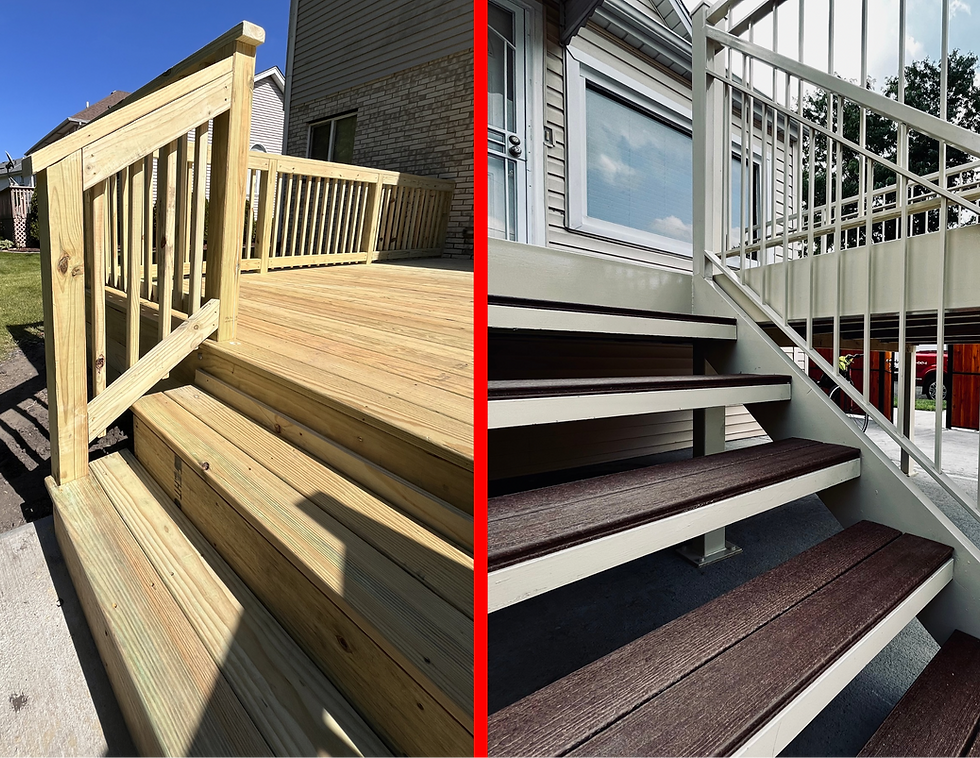
Traditional Wood Framing: This involves using heavy pressure-treated pine lumber for beams and joists. While functional, wood is a organic material that naturally holds moisture, varies in quality from board to board, and is prone to natural defects like knots.
Our Custom Steel Framing System: At JFC, we don't use flimsy, off-the-shelf light-gauge metal. We engineer a commercial-grade, custom steel framing system. Depending on the exact load requirements and layout of the job, we build the primary structural frame using heavy-duty 8 to 10-inch steel C-channels, supported by 6-inch steel C-channel joists.
The result? An incredibly rigid, commercial-grade foundation that dwarfs the structural capacity of traditional lumber.
Head-to-Head: Why Steel is Rewriting the Rulebook
If you are trying to choose between the two, here is how steel and wood compare across the areas that matter most:
1. Lifespan and Weather Resistance
Wood: Pressure-treated wood is treated with chemicals to resist rot and bugs, but it isn’t immortal. Exposed to Chicago’s relentless snow loads, freezing-and-thawing ground shifts, and humid summers, a wood frame will gradually degrade, typically lasting 15 to 20 years before safety becomes a concern.
Steel: Steel is completely impervious to rot, mold, termites, and wood-boring beetles. It won’t absorb moisture during a winter blizzard or split apart during a summer heatwave. A structural C-channel steel frame is built to survive for many decades, vastly outlasting any wood structure on the market.
2. Aesthetics and Laser-Straight Lines
Wood: Have you ever looked at a deck and noticed the boards look slightly wavy or uneven? That’s because wood naturally twists, warps, crowns, and shrinks as it dries out.
Steel: Steel is dimensionally stable. A steel C-channel joist is perfectly straight the day it’s manufactured, and it will remain perfectly straight 30 years from now. If you are investing in a premium composite or PVC deck surface, a steel frame ensures your deck floor remains completely flat, level, and flawless over time.
3. Massive Spans and Open Views
Wood: Because wood has structural limits, a large wood deck requires a forest of vertical support posts underneath it to handle the weight safely. This can ruin your view or take away usable patio space below the deck.
Steel: Because our steel C-channels boast a massive strength-to-weight ratio, they can span incredibly long distances without bending. This means we can design multi-level or elevated decks with significantly fewer vertical support posts, keeping your lower-level patio wide open, spacious, and unobstructed.
4. Safety and Fire Resistance
Wood: Dry timber can catch fire.
Steel: Structural steel is entirely non-combustible. For homeowners looking for ultimate peace of mind—or commercial properties aiming for maximum fire safety compliance—steel framing delivers an unmatched safety rating.
The Bottom Line: What About the Cost?
There is no getting around the financial reality: structural steel requires a higher upfront commitment.
In the Chicagoland market, a custom-engineered steel-framed structure typically costs about 1.5x to 2x more upfront for labor and materials than a standard pressure-treated wood frame.
So, who is steel for?
If you are building a smaller, entry-level deck or planning on moving in a few years, a properly built pressure-treated wood frame is a highly reliable, cost-effective choice.
However, if you are building a large, complex, elevated, or multi-level deck—or if you simply want to build a structure once and never worry about your family’s safety or structural rot again—steel is the ultimate investment. It protects your property value and eliminates future replacement costs.
Built For Your Home. Engineered For the Future.
Whether you decide that the classic efficiency of a premium wood frame is right for your budget, or you want the unshakeable, lifetime durability of a custom steel C-channel system, the most critical factor is the team putting it together.
At JFC, we excel at the heavy, complex structural work that standard handymen can't touch.
From custom residential backyard retreats to heavy-duty commercial structural layouts, we engineer every single frame to exceed local building codes and stand the test of time.
Stop guessing about what’s beneath your feet. Let’s build something permanent.
👉 Click here to contact us online or call us at (773) 628-3575 today to discuss your project. We’ll help you weigh steel versus wood for your specific layout and provide a comprehensive structural estimate.
Comments