.png)
Wood vs. Composite Decks: The True 10-Year Cost Breakdown
- Jimenez Fence Corp.

- Jun 25
- 4 min read
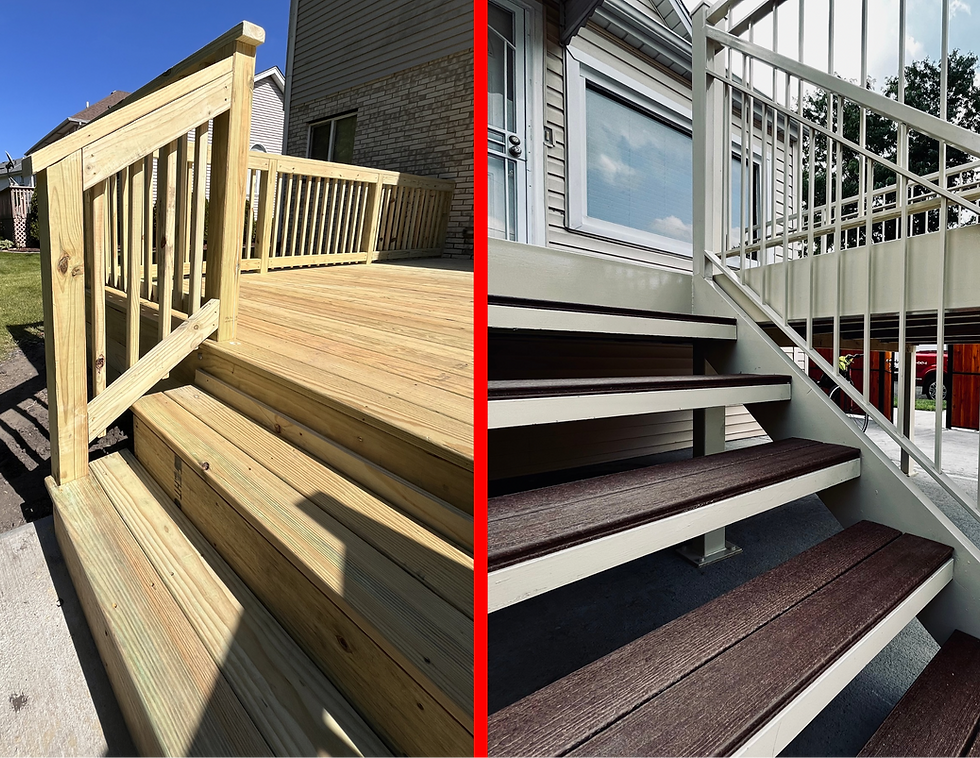
When planning a new deck in the Chicagoland area, one of the biggest decisions you’ll make right out of the gate is choosing your decking material. For most homeowners, it comes down to a classic debate: Pressure-Treated Wood or Composite (like Trex)?
At first glance, pressure-treated wood looks like the obvious winner for your wallet. But a deck isn't just a one-time purchase—it’s a long-term investment. Over a decade of facing brutal Chicago blizzards, freezing-and-thawing cycles, and humid summers, the true cost of owning that deck begins to shift.
To help you make the right choice for your home, backyard, and budget, let’s look past the initial price tag and break down the true 10-year cost of wood versus Trex composite.
The Upfront Cost: What to Expect at Day One
There is no sugarcoating it: composite decking requires a higher initial investment.
Pressure-Treated Wood: This remains the most budget-friendly option upfront. It provides a beautiful, classic wood look at a lower initial material cost. (Note: Even when we build a composite deck, we typically use pressure-treated pine for the structural base and framing because of its incredible strength.)
Trex Composite: Depending on the specific line of Trex decking you choose (from entry-level to premium collections), a composite deck surface typically costs 1.5x to 2x more upfront than a standard wood deck.
If you are looking purely at the check you write on day one, wood wins. But the story doesn't end there.
The Hidden Costs: 10 Years of Maintenance
Chicago weather is incredibly harsh on outdoor structures. To keep a pressure-treated wood deck from cracking, warping, twisting, or rotting, it requires strict, ongoing maintenance.
Trex composite, on the other hand, is engineered from recycled plastics and wood fibers to completely resist the elements.
Here is what maintenance looks like for both over a decade:
Pressure-Treated Wood Maintenance (Years 1–10)
To get 10 reliable years out of a wood deck in Illinois, you cannot skip maintenance.
Every 1 to 2 Years: The deck must be thoroughly power-washed, sanded down to remove splinters, and treated with a high-quality water-repellent sealer or stain.
The Cost: If you hire a professional crew to strip and restain a standard-sized deck every couple of years, it can easily cost $1,000 to $2,000+ per treatment. If you do it yourself, you are looking at hundreds of dollars in premium stains, sanders, and pressure washer rentals—plus losing 2 to 3 full weekends of your summer every single time.
Trex Composite Maintenance (Years 1–10)
Composite decking does not require sanding, staining, painting, or sealing. It is completely splinter-free and UV-resistant, meaning the color won't fade under the harsh summer sun.
Once a Year: We recommend a quick, simple cleaning once a year (usually in the spring) using a garden hose, some mild dish soap, and a soft-bristle brush. This simply washes away the dirt, grime, and debris left behind by harsh winter snows.
The Cost: Virtually $0, and it takes about an hour of your time.
The 10-Year Math Breakdown
Let’s look at how the math usually plays out over a decade for a standard, medium-sized backyard deck:
Cost Factor | Pressure-Treated Wood Deck | Trex Composite Deck |
Upfront Cost | Lower Baseline (e.g., $8,000) | 1.5x – 2x Higher (e.g., $13,000 - $16,000) |
Stain / Sealer (10 Years) | $1,500 – $2,500 (DIY materials) OR $4,000+ (Professional labor) | $0 |
Sanding / Repairs | Expected (replacing warped boards/splinters) | $0 (Resists warping and insects) |
Your Weekend Time | Dozens of hours spent laboring in the sun | 1 hour a year to hose it down |
Appearance at Year 10 | Shows distinct aging, weathering, and fading | Looks almost exactly like the day it was installed |
TOTAL 10-YEAR COST | Initial Cost + Thousands in Maintenance/Time | Initial Cost + $0 Maintenance |
By year 10, the total cost of ownership often evens out. If you plan on staying in your home for a long time, composite frequently becomes the more affordable (and significantly less stressful) option.
However, if you are planning to move in a few years, or have a strict cap on your current budget, pressure-treated wood delivers an excellent, functional space at a price you can afford right now.
Which One is Right For You? Let’s Figure It Out Together
There is no single "right" answer when it comes to choosing between wood and composite. It completely depends on your budget, how long you plan to live in your home, and how much free time you want to spend on backyard chores every summer.
Whether you want the timeless, natural appeal of a professionally built pressure-treated wood deck, or the stress-free luxury of a Trex composite outdoor living space, the most important factor is the foundation it's built on.
At JFC, we are experts in Chicagoland framing, building codes, and structural integrity. We don't push you into a material you don't want—our goal is simply to build you a gorgeous, safe structure that fits your lifestyle perfectly.
Let’s design your dream backyard.
👉 Click here to contact us online or call us at (773) 628-3575 today to get a detailed, personalized estimate for your upcoming deck project. We will help you weigh your options and find the perfect fit for your budget!

Comments